Freedom in between apprehension and test is not a politeness. It is a vital component of just how the criminal courts operate. Whether a person goes home or stays in a cell while their case crawls with the system impacts everything that follows: ability to function, to look after family, to meet with counsel, and to mount a protection. The two most common pathways back home are release on one's own recognizance, usually shortened to OR or ROR, and posting bail, sometimes through a bail bond. They share the same purpose however operate really various assumptions concerning risk, money, and accountability.
This overview describes how courts select in between OR and bail, what responsibilities every one imposes, and just how the option influences a case in the real world. It makes use of what legal representatives, pretrial officers, and court team really see: the documentation, the telephone call, the tips that function, and the blunders that land individuals back in handcuffs.
The core distinction in ordinary terms
Own recognizance release is a pledge. The court trust funds the individual to return for future hearings and comply with problems without turning over money upfront. The guarantee is enforceable: miss out on court or break a problem, and a warrant problems, penalties can be assessed, and future launch becomes harder.
A bail bond is a financial assurance. The court sets a buck amount as safety. A person can post the complete cash money amount or use an accredited surety, frequently called a bail bond company, which charges a nonrefundable cost to publish a bond on the individual's behalf. The cash, or the bond, stands as security versus failing to appear.
Both tools aim to handle threat. Judges select amongst them after evaluating a number of variables: infraction severity, prior criminal background, history of showing up in court, ties to the neighborhood, and any kind of public safety and security worries. In many jurisdictions, a pretrial services report and a risk analysis tool notify the choice, however the judge's discretion still matters.
What OR launch looks like in practice
If the court grants OR, the staff provides a form to authorize. The type details the next court date and any type of conditions. Usual problems consist of maintaining a present address on data with the court, no new arrests, following all legislations, and remaining in touch with pretrial services. Sometimes the court adds targeted conditions: a no-contact order in a residential situation, a stay-away order for a retail burglary situation, or surrender of a ticket if trip threat is a concern.
The process is quick. If approved at the opening night, the individual might be back home within hours. There is no money to publish and no bond representative to call. Conformity depends on the individual's security and the court's support systems. In places that utilize message tips and offer clear, readable paperwork, failure-to-appear rates drop substantially. Even tiny interventions matter. A public defender I dealt with made a behavior of circling around the court day in red pen and asking the customer to repeat it out loud. That straightforward rep reduced missed hearings.
OR prevails in lower-level instances, newbie offenses, and scenarios where there is strong community anchoring. An individual with stable real estate, a work, and family members nearby presents a profile that guarantees a court. That claimed, it is not limited to violations. Plenty of nonviolent felony defendants receive OR if various other danger variables look favorable.
With OR, repercussions for mistakes escalate. Missing out on one court date could cause a bench warrant that is subdued when the individual returns voluntarily within a brief time. Repeated failures, or any brand-new apprehension, can transform OR right into money bail or custodianship. Juries bear in mind patterns.
What a bail bond is and why it exists
Bail is not a penalty and not a punishment. It is a mechanism to guarantee look. If the court establishes bond at 10,000 bucks, the individual has two options. The first is publishing the total in money or cashier's talk to the court. That money is normally returned at the end of the situation, minus any type of fees or fines, as long as the person makes all needed looks. Friends and household occasionally swimming pool funds to do this. The 2nd option is utilizing a bail bondsman, a certified surety that uploads a bond for the sum total in exchange for a fee. The regular charge varieties from 8 to 15 percent of the bond, set by state regulation. That charge is not reimbursed. Some representatives approve collateral like a vehicle title or a lien on a home, specifically for bigger bonds.
The bond is an agreement amongst the offender, the indemnitor (frequently a relative), and the guaranty business. If the individual falls short to show up and does not return to court within the duration allowed by law, the court can forfeit the bond. The surety after that pays the court unless it efficiently nabs and surrenders the individual. That is where the industry reputation for fugitive hunter comes from, though in several states the procedure is extra regulated than television recommends. The functional fact is less complex: bail representatives spend far more time making tip phone calls and nudging people to reschedule than chasing after fugitives down alleys.
Bail exists since not everybody receives OR, and courts require a bar for higher perceived risk. Whether money is the right bar is a live plan discussion in the USA, and numerous territories have actually greatly reduced money bail. Yet where it remains, bail bonds are the marketplace feedback to the void in between high bond and an individual's readily available cash.
How judges select between them
A judge's task in the beginning look or arraignment is triage. There is minimal time, often only minutes per instance. The judge scans the charging document, a pretrial solutions report if readily available, and any criminal history. District attorneys may argue for bail or apprehension. Defense attorney highlights ties, work, and any type of weak points in the state's case.
A simple shoplifting case with no previous failings to show up commonly gets OR, perhaps with a stay-away order from the store. A bar fight with minor injuries might obtain OR plus a no-contact problem and a chemical abuse examination. A robbery with prior FTAs and an out-of-state address will likely draw bail. In domestic physical violence instances, many courts require a no-contact order and occasionally an ankle screen, even if launch is OR, to manage safety danger without money.
Risk analysis tools can turn the outcome. They create a rating based upon elements like age, previous convictions, prior FTAs, and current cost. Ratings are consultatory, not binding, and various counties position different weight on them. Numerous judges still rely greatly on qualitative cues: a member of the family speaking out in court, the presence of an employer's letter, or a recorded medical condition that makes jail risky.
Conditions that frequently affix to both
Whether launch is OR or on bond, courts can order problems tailored to the situation. Giving up a passport, general practitioner monitoring, avoiding medicines or alcohol, time limit, and counseling are common. The enforceability of problems relies upon pretrial solutions, probation policemans, and often technology. GPS devices are not sure-fire, but they give a trace. Medication testing can be arbitrary or scheduled. Disagreement can cause a hearing and possible remand to custody.
A refined point: conditions need to be practical. I have seen courts established a weekly in-person check-in for an individual that lived 2 hours from the court house without a car. The outcome was foreseeable: missed out on consultations and ultimate protection. A far better remedy was phone check-ins and leveraging a local source for screening. Defense attorney that know the regional pretrial office can typically negotiate these functional adjustments on the record.
Financial mechanics and hidden costs
The headline contrast is straightforward, cash versus no money. The full picture of cost includes time, transportation, and opportunity cost.
Cash bail bind funds for months, often longer than a year. Courts ultimately return the principal minus administrative charges and any type of fines or restitution the judge orders at sentencing. Families often treat this as compelled financial savings. That is a risky attitude. If the situation finishes with fines or probation charges, the reimbursement diminishes. If a forfeiture takes place because of a missed out on hearing, the cash money is at threat. Some courts permit a brief grace period to vacate forfeits if the individual reappears with an excellent description, but do not rely upon leniency.
Bail bonds shift the price right into a nonrefundable charge. If bond is 20,000 bucks and the premium is 10 percent, expect to pay 2,000 bucks plus administrative charges. Collateral might still be asked for larger bonds. If the individual breaches the bond's problems, the guaranty can demand even more security or give up the person to the jail to restrict its direct exposure. Family members commonly miss that condition. It is basic language in the contract.
OR has no cost, yet it can lug expenses. Electronic surveillance can need a day-to-day charge, 7 to 15 dollars is normal in many locations. Drug screening fees might use. Transportation to frequent check-ins or court looks builds up, and missing out on help hearings is as costly as any kind of charge. When advising customers, I contrast overall concern, not simply the monetary line item.
Practical advantages and dangers of each path
Release on own recognizance maintains sources. Individuals can maintain paying rental fee, care for youngsters, and keep the rhythm of life that makes conformity much easier. The lack of financial stress reduces the temptation to plead swiftly just to venture out, a documented phenomenon in systems that rely upon high money bail. The primary threat with OR is that life hinders and results in a missed day. The solution is basic: create redundant tips and call the staff if something goes sideways. Courts like a positive telephone call to a bench warrant.
Bail and bail bonds enter into play where judges desire a stronger guarantee. For some clients, having cash on the line focuses attention. The bond agent comes to be an added layer of liability. Representatives will certainly call, text, and often drive customers to court. That support has conserved numerous looks. The compromise is cost and the possibility of an abandonment if the representative sheds confidence. I have watched a bond get revoked not because the person missed out on a court day, however since they moved without informing the representative. From the representative's viewpoint, that damaged the count on that sustains the bond.
A fast side-by-side snapshot
- OR launch: no ahead of time money, trust-based with enforceable problems, ideal fit for lower danger accounts and solid neighborhood ties. Bail bond: economic assurance, involves a nonrefundable costs if making use of a guaranty, even more typical when danger factors exist or when statutes mandate bond on specific charges.
Where statutes and regional regulations shape outcomes
State legislation heavily affects pretrial launch. Some states have moved toward presumptive release for the majority of misdemeanors. Others have carved out exceptions that mandate money bond or apprehension for sure fierce criminal activities or repeat offenses. County-level techniques additional form fact. One court house could consistently provide OR on low-level felonies with robust pretrial guidance. The next county over might set small bond quantities instead, leading defendants to either post a small cash bond or use a bondsman.
There are additionally places where bond timetables still function as the starting point. A schedule details quantities for usual fees. Judges are not bound by these numbers, but they create inertia. Defense attorney who understands the timetable can suggest properly for variances based on mitigating elements, like clinical needs or childcare duties, that a static timetable can not capture.
Impact on situation strategy
Spending the pretrial duration in the house versus captive commonly drives situation outcomes. Individuals launched on OR or bond often tend to meet with their attorney extra constantly, collect files that help their case, and full aggressive tasks like treatment or community service that can influence a plea deal. A district attorney that sees therapy certifications and clean tests is more probable to adjust recommendations. A judge that sees conformity on pretrial conditions is a lot more receptive to leniency.
Conversely, guardianship applies pressure. An individual could agree to an appeal they would not accept if they were complimentary, just to end the uncertainty. That is one reason defense lawyers push hard for OR or inexpensive bond at the earliest hearing. The home window for shaping pretrial problems is best at the start. As soon as a pattern of infractions is set, options narrow.
Special cases and edge scenarios
Immigration holds complicate everything. If somebody goes through an ICE detainer, uploading bail in the criminal case might merely transfer custody to immigration authorities. In those circumstances, defense attorney considers the advantages of neighborhood launch versus the likelihood of immediate immigration detention. Family members need to be briefed concerning this prior to publishing a big cash bail or signing a bond contract.
Warrants from various other regions or states can also overthrow release strategies. A judge might grant OR on the neighborhood case however hold the individual for pickup on the out-of-county warrant. Sychronisation matters. Calling the various other territory to validate intent to extradite can avoid a surprise. When feasible, advice asks to arrange both issues in fast succession to prevent dead time in jail.
High-profile instances draw in stricter problems. Juries deal with public scrutiny and sometimes choose greater bond with general practitioner monitoring also when the risk factors are blended. Defense attorney can soften this by proposing a structured plan: third-party custodian, therapy registration with reporting, and validated employment. Juries respond far better to a strategy with specifics than to general assurances.
How to get ready for a launch hearing
Evidence of security relocates the needle. Bring proof of residence, a letter from an employer, and recommendations. If there is a clinical condition, bring documents. If there are children or caregiving responsibilities, be ready to clarify how those obligations connect the person to the community. If the fee entails compound use, align an assessment rapidly. Juries appreciate action over promises.
On bond requests, recommend practical quantities and particular guidance terms. A request that recognizes threat and addresses it with concrete safeguards typically exceeds a covering demand for OR. Accuracy connects responsibility.
Working with a bail bonds representative thoughtfully
If the court establishes bond past reach for cash money uploading, a trusted bail bonds representative can be a companion. Inquire about the costs, any layaway plan, and whether collateral is required. Read the abandonment stipulation. Make clear reporting expectations. Excellent agents are clear concerning tips and logistics. They desire the individual to succeed; forfeits are expensive for them too.
For households, deal with the indemnity seriously. If you authorize as indemnitor, you may be liable if the bond is forfeited. Do not co-sign if you do not have regular contact with the person or if you think they will not conform. It is a difficult boundary to establish, however it avoids larger losses later.
What takes place after a missed out on court date
Life events happen. Automobiles break down, childcare fails, schedules obtain blended. If a court date is missed, act swiftly. Call the legal representative instantly. Numerous courts allow a same-week walk-in or an expedited activity to suppress the bench warrant. Turning up with proof of the factor, such as a tow invoice or medical paper, makes the discussion much easier. Waiting turns a small trouble into a brand-new apprehension with cuffs and a greater bail.
Bond forfeits do not take place instantly. There is generally a legal window for the surety to return the individual to court and to move to allot forfeiture. That claimed, daily shed makes it more difficult to work out. Representatives are much more adaptable when clients communicate early.
The plan background and why it matters to individuals
Across the nation, bail reform has moved the landscape. Some jurisdictions have eliminated cash bond for the majority of pacifist offenses. Others have expanded pretrial services and text reminders. Proof from these reforms often tends to show that look prices remain steady when courts supply assistance and clear problems, which public safety and security does not worsen merely due to the fact that cash bond is much less common. Yet reforms are unequal. An individual apprehended 5 miles from a region line might encounter an entirely different pretrial regime.
Knowing the regional rules settles. If your county makes use of hearing reminders, ensure your call details is existing. If it depends on paper notifications, request for a replicate and https://mylesfbcx303.lowescouponn.com/the-background-and-advancement-of-bail-bonds-in-the-u-s put it on the fridge. If the court supplies transportation aid or remote check-ins, utilize them. Tiny steps worsen into fewer mistakes.
A grounded means to pick between OR and bail
When you have a say in the issue, or when suggesting a loved one, assume in terms of threat administration instead of labels.
- Ask what conditions will sustain success. Text pointers, experiences to court, or a friend who can function as a third-party custodian can be more valuable than uploading money. If bail is set, compute truth price over time. A 3,000 buck premium on a 30,000 dollar bond is not reimbursed. If the family can upload 3,000 dollars cash on a decreased bond and afford the risk, that might be smarter than paying a costs, yet only if court looks are rock solid.
Common misconceptions that should have correction
"OR suggests the court believes the instance is weak." Not so. OR mirrors risk analysis about appearance and safety and security, not regret. Prosecutors still go after OR cases vigorously.
"Uploading cash bond guarantees you win your instance." Bail is different from the values. It only regulates release status. You still have to safeguard the charge.
"Bail bondsmen can work out with the judge." Agents do not set bond. They can help browse logistics and, in some courts, signal dependability by vouching for a customer. The quantity and conditions are up to the court.
"Missing one hearing damages whatever." It complicates points, however quick activity can repair the damage. Judges reply to motivate, sincere explanations and a plan to stop repeats.
Final ideas from the trenches
Pretrial launch decisions are not abstract. They arrive on real people with active, unpleasant lives. OR leverages depend on and structure, and when backed by easy assistance like tips and sensible check-ins, it works well for many instances. Bail and bail bonds action in where courts view greater threat or where the law requires added assurance. They include a financial layer that can assist some offenders focus, but they also impose costs and possible dispute with sureties.
The most intelligent course begins with prep work. Program the judge concrete connections, bring documents, and suggest conditions that match the person's truths. If bail is purchased, look for a respectable representative and read the contract. If OR is given, treat it like an agreement you plan to honor. Keep the court's number in your phone. Verify the following day twice. Inform your lawyer about any kind of life adjustments that could affect conformity. Those routines safeguard freedom much better than any kind of pile of money ever before could.
For individuals working inside the system, remember the sensible information that tilt outcomes. Clear documentation defeats lawful jargon. A call the day before court conserves time and reduces warrants. Creative conditions fix troubles that cash never will. And when Bail Bonds are required, uncomplicated communication with the representative and the court creates a group that pushes the situation toward a steady, authorized finish.
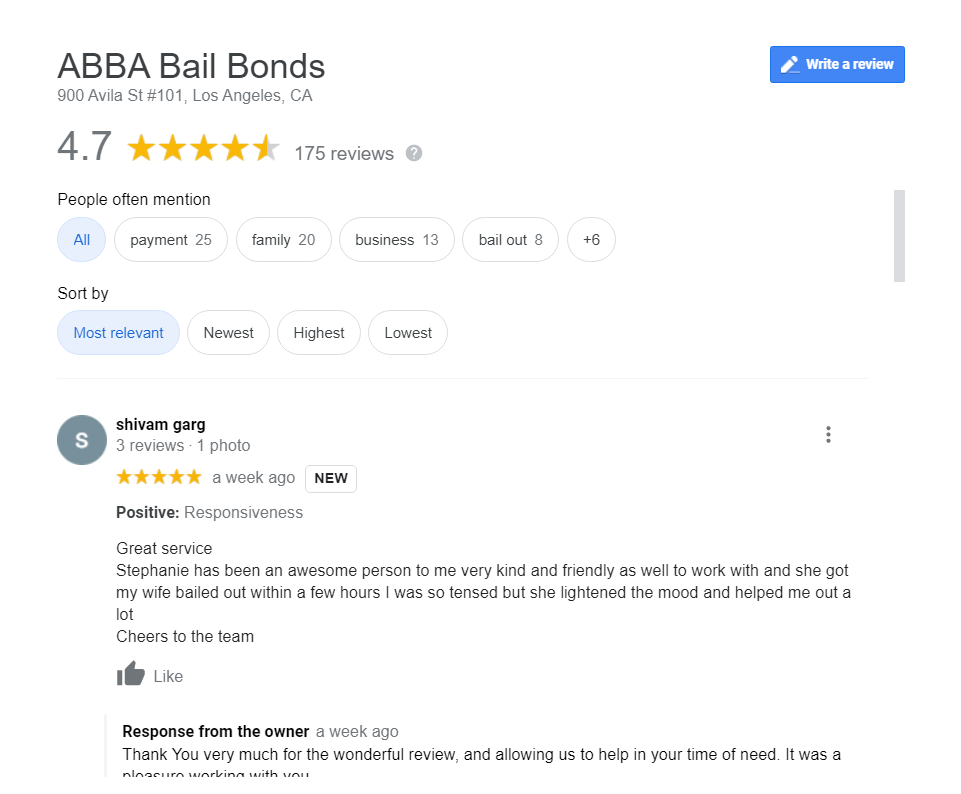
ABBA Bail Bonds 900 Avila St STE 101 Los Angeles, CA 90012 (213) 296-0901 https://abbabailbonds.com